
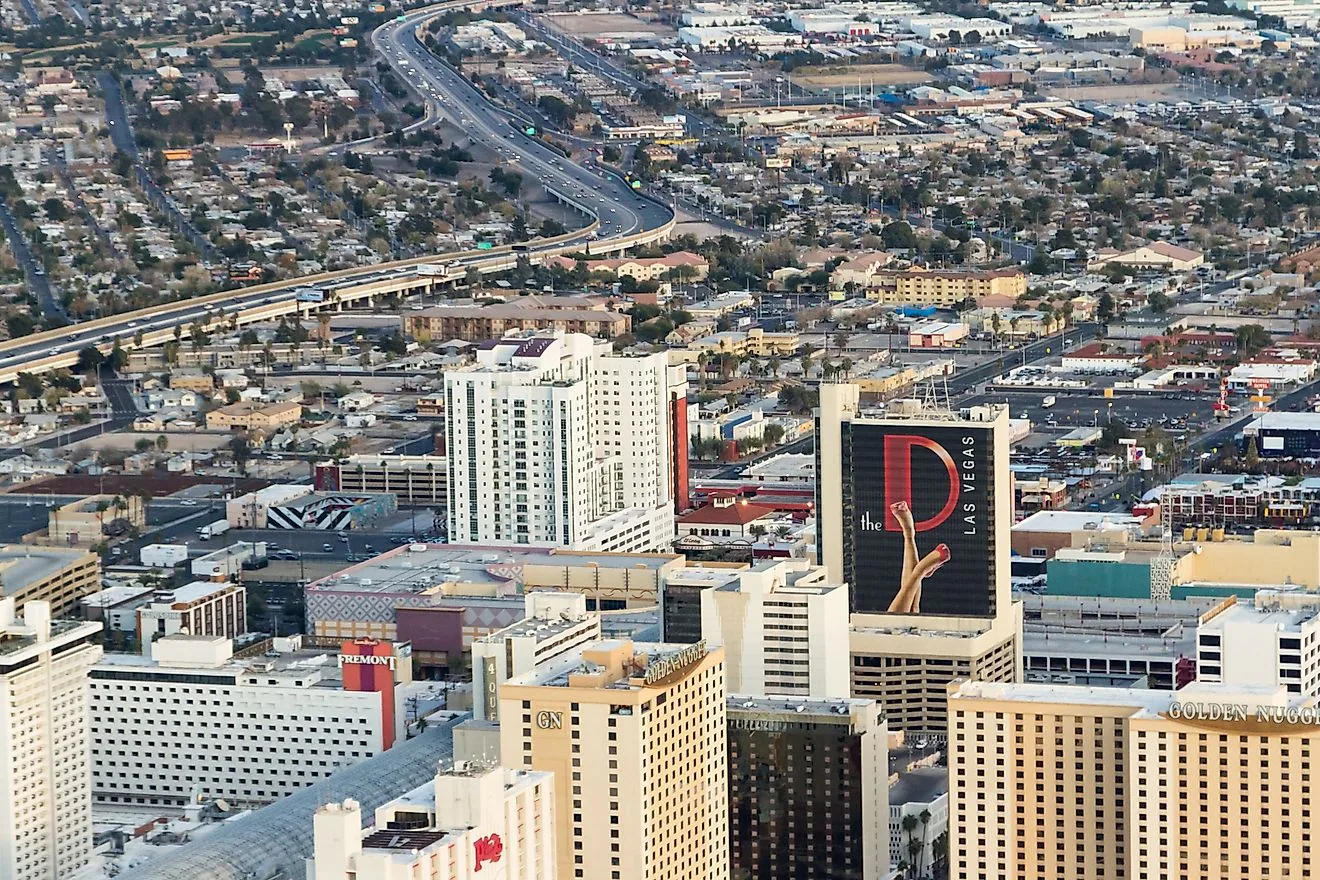
Roof insulation, membrane and warranty-record services for commercial buildings in Symphony Park, Las Vegas, NV, from survey to repair or replacement.
Insulation thickness, cover board and the fastener pattern are the three items worth pulling from the file before any roof decision in Symphony Park. Las Vegas lists the park as one of twelve districts in its Vision 2045 downtown master plan, and the roof decision for a building there usually starts with the layers under the membrane, not the membrane itself. We open a test cut, measure what sits under the surface and compare it with the roof plan, then tell the owner whether the assembly supports a repair, a recover or a tear-off. The same walk lists the drains, the curbs and the flashing, so the scope answers a defined question.
Layers: insulation, cover board and fasteners
A commercial low-slope roof is a stack: deck, vapor control where the design calls for it, insulation, a cover board in many assemblies, and the membrane on top. Each layer has its own failure mode. Insulation absorbs water if the membrane is breached. A cover board resists punctures and hail. Fasteners and adhesive hold everything against wind uplift.
A test cut shows the real thickness, the type of insulation, the condition of the deck and whether the layers are bonded or loose. Those facts decide the available choices. Dry, firm insulation can accept a new membrane or a restoration coat. Wet, crumbled or compressed insulation cannot, and the work grows. Our insulation and cover board scope states the thickness, the board type and the fastening pattern as separate lines, so the owner sees what drives the price.
Commercial Roofing Questions
What does a test cut tell an owner that a surface walk does not?
It shows the layers: insulation thickness and type, the cover board if there is one, the condition of the deck and how the membrane is attached. A surface walk shows seams and flashing, while the cut shows whether the assembly below can accept a recover or a coating. The result changes the scope, so the cut goes in before pricing and the opening is sealed the same day.
Why does perimeter metal get so much attention after a windy spell?
Uplift is strongest at the edges and corners, and the edge metal is the first part to loosen when attachment weakens. A lifted coping joint can let wind under the membrane and water into the wall. A quick pass along the perimeter after a gust protects the street below and the roof beneath.
Should an owner assume a newer roof still carries its manufacturer warranty?
No, the document decides. Warranties carry conditions on maintenance, who repairs and when notice is due. We ask for the paperwork before touching the roof and repair to its stated method. If no warranty can be found, we write a condition record so later decisions rest on evidence about the roof, not on assumptions.
What happens to a roof when summer heat cycles it every day?
Materials expand and contract, and the movement works on seams, flashing and sealant until a joint opens. Surface temperatures run well above air temperature in the desert, so the stress is real even on a roof that looks fine from the street. We look for lifted seam edges, hardened sealant and flashing that has pulled from a wall, then re-seal or rebuild the joint.
How is a roof replacement price built from the inspection findings?
Each driver gets its own line: roof area, insulation depth to replace, penetrations and drains, edge metal length and access difficulty. When a test cut finds more wet insulation than expected, only that line moves. The owner sees the change in writing before the crew continues, which keeps the budget tied to what was found on the roof.
More Roofing Detail
COMMERCIAL ROOFING IN NORTH LAS VEGAS, NEVADA
Thermal movement: how daily heat works the seams
A roof surface in the Las Vegas Valley swings through a wide temperature range between a summer afternoon and the night that follows. Membranes, flashings and metal edges expand and contract on that cycle, and the movement concentrates stress at seams, corners and the places where one material meets another. The airport weather station records a 70.1 degree annual mean, but the surface of a roof runs far hotter than the air above it.
We look for symptoms of that movement: seams with lifted edges, flashing that has pulled away from a wall, sealant that has hardened and split, and metal laps that no longer close. The repair depends on the cause. A seam can be cleaned and re-welded or re-sealed, a flashing can be re-lapped, and an expansion joint can be rebuilt with a flexible cover. Left alone, each of these admits water the first time monsoon rain arrives.
Wind: edges, corners and loose perimeter metal
Shoulder-season wind events load a roof harder than most owners plan for in a desert market. Uplift pressure on a roof is greatest at the corners and along the perimeter, so those are the zones that get the closest inspection. We check that the edge metal is fastened with the right pattern, that coping joints are sealed, and that the membrane is secured under the edge detail.
A loose piece of perimeter metal is a hazard to the street below and a warning that the attachment has failed. After a significant gust, a quick perimeter pass is worth doing, and the findings go in the file. Our wind damage repair work starts by finding where the membrane lifted and why the attachment let go, then it restores the detail so the same corner does not open again.
Warranty paperwork: what the building file should hold
A new roof is only as protectable as the paperwork that goes with it. A manufacturer warranty, if one exists, has conditions: maintenance, repair by approved methods and notice after damage. Owners who cannot find the warranty cannot tell what is covered, and a repair done the wrong way can hurt the claim. We never assume warranty status for a roof; we ask for the document and read it.
When the paperwork exists, we repair to the stated method and photograph the work. When it does not, we write a condition record of our own, so the next manager starts with facts. Roof warranty management is part of that file, along with the plan, the test-cut results and the inspection dates. Owners with buildings across the Civic and Business District and Symphony Park can keep one format for every roof.
Scope and timing: what moves the price
Cost is driven by the area of the roof, the depth of the insulation that must be replaced, the number of penetrations and drains, the length of edge metal and how hard the roof is to reach. Timing is driven by material lead times, the permit path and the monsoon season. The permit question is answered before an order is placed, since insulation requirements on a replacement come from local review.
We write the proposal with each of those drivers visible. A change in one line, such as more wet insulation than the test cuts suggested, changes the price of that line, not the whole job. A short commercial roof inspection ahead of the bid reduces those surprises.
Sequence matters for owners with more than one building. A roof near the Gateway District and a roof in Symphony Park may sit in different conditions, so we rank them by active leaks first, then by exposed details, then by remaining membrane life. The ranking sets which budget line goes first and which roof can wait a cycle with monitoring. Where a tenant lease, a lender requirement or a sale date forces a deadline, we say which items must finish before it and which can follow.
Bring the roof file and the warranty paperwork
Send the roof plan, any warranty document, repair invoices and the dates of past leaks, and we will schedule a walk and a test cut that tell you what the assembly can support.