
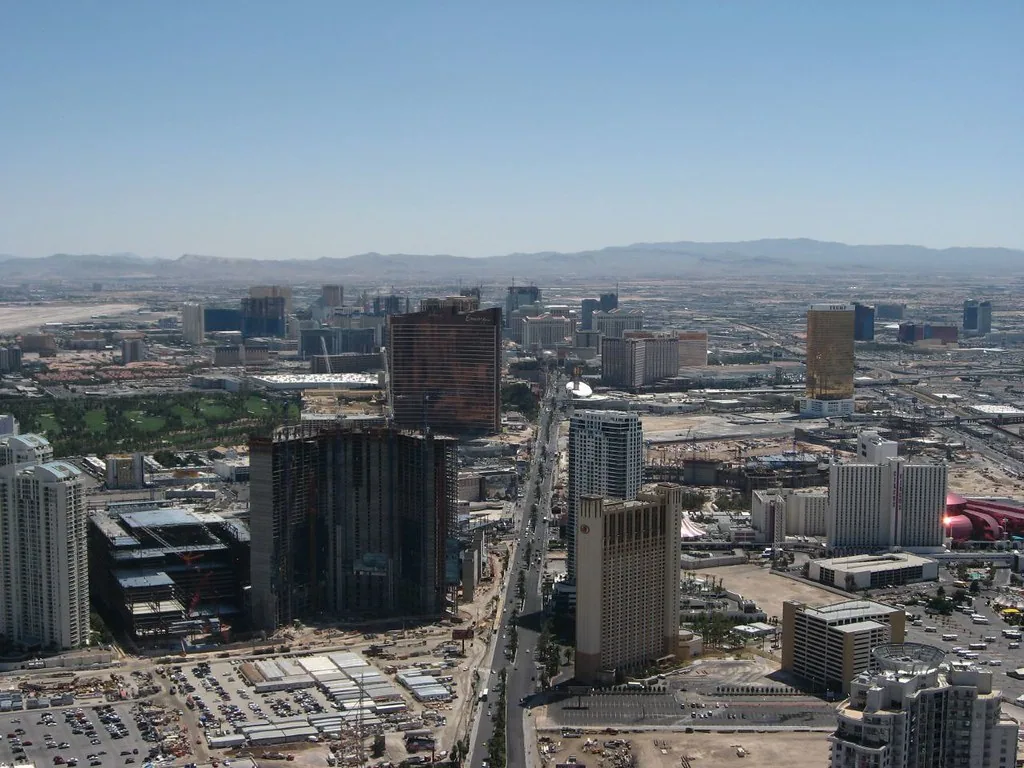
Drone surveys, condition reports and roof repair for commercial buildings in the Cashman District of Las Vegas, NV, for owners who inherit or buy a roof.
A buyer or new property manager in the Cashman District inherits a roof along with the building, and the first job is to learn what that roof has already been through. The City of Las Vegas downtown plan includes Cashman as one of its twelve planning districts, and a commercial building there may change hands, change tenants or change managers at any time. We build the picture from three sources: the paper record, a drone pass over the full surface, and a hands-on walk to the details the drone cannot judge. The result is a written roof condition report that ranks every defect, so the new owner can budget with facts.

Paper record: what to collect before anyone climbs
The roof file is the cheapest part of a survey and the one most often missing. We ask for the roof plan, the date and scope of the last replacement, repair invoices, warranty documents, leak logs and any insurance claims. Each item narrows what to look for. A repair invoice that lists a pipe boot points to a penetration worth re-checking. A claim date points to a storm worth matching against damage on the roof.
If the file is thin, the roof itself has to supply the history: patches of different ages, layers of mastic, mismatched membrane colors and stacked recovers all show what has been done before. We photograph those clues and map them. A seller or prior manager may not have the details, so the survey fills in what the file lacks, and the owner leaves with a record of their own.
Tenant leases matter here too. Some leases make the landlord responsible for the roof and others pass repair duties to the tenant, and an owner who knows who pays can route a leak call correctly. We list roof-mounted tenant equipment by unit, since a tenant's rooftop unit and its line sets are common places for water to enter and for disputes to begin about who caused it.
Commercial Roofing Questions
What documents should a new owner ask the seller for about the roof?
The roof plan, the date and scope of the last replacement, repair invoices, warranty papers, leak logs and any storm-related insurance claims. Each narrows what we look for on the roof. If the seller cannot produce them, the survey records the roof's own history, patches, layers and mismatched materials, and the buyer begins with a documented baseline.
What can a drone show that a walk cannot?
It sees the whole surface at once, including areas that are unsafe to step on, and shows ponding patterns, dirt lines, loose edge metal and equipment layout. Thermal images can hint at wet insulation. It cannot press on seams or probe flashing, so a hands-on walk and moisture confirmation follow wherever the images raise a question.
How are roof defects ranked in a condition report?
Three bands: items admitting water now, items likely to admit water within a season or two, and cosmetic items. Each entry has a location, a photograph and a repair description. The first band is repaired promptly, the second is budgeted, and the third is monitored, which lets a manager with limited funds act in the right order.
Why does drainage get as much attention as the membrane?
Desert storms deliver water in short bursts, so a blocked drain, a high scupper or a sump with no overflow turns a modest storm into standing water. Ponding adds weight and ages a membrane faster. We clear and test each outlet and report what a correction would involve, from cleaning to adding tapered insulation.
How does a survey help when buying a commercial building?
It puts a number on the roof before closing. A buyer who knows that a zone needs replacement can negotiate the price, plan the capital and brief the lender. The survey records condition on a date, with photographs and moisture readings, so later disputes about when damage occurred have evidence behind them.
More Roofing Detail
COMMERCIAL ROOFING IN NORTH LAS VEGAS, NEVADA
Drone pass: seeing the whole surface once
A drone covers a large roof faster than a person on foot and sees areas that are unsafe or hard to reach. High-resolution photographs show ponding patterns, dirt lines, seam condition, loose edge metal and equipment layout. Thermal imaging, flown at the right time of day, can point to wet insulation as a temperature difference after the sun sets.
The pass is a screening tool. It tells the crew where to look hardest, and it does not replace a hands-on check of seams and flashing. Our drone roof inspection work pairs the images with ground-level notes, then confirms suspected wet areas with an infrared moisture survey and core samples. Flights keep to safe distances, building access rules and local airspace limits.
Hands-on walk: seams, flashing and drains
Photographs cannot press on a seam or feel a soft spot underfoot. On the walk, we probe seam edges, look for open laps, check flashing terminations at walls and curbs, test the sealant at penetrations and clear the drain strainers to see how water leaves. We listen for the hollow sound of a delaminated area and record where the membrane has lost adhesion.
Each defect gets a location, a photograph and a plain description. We rank them in three bands: items that admit water now, items that will admit water within a season or two if left, and items that are cosmetic. The ranking helps a manager who has a limited budget, since the first band is repaired promptly and the others are planned. An item in the second band, such as a split flashing, costs far less to fix before the next flashing failure opens the roof.
Weather record: reading storm and heat history
The valley is a hot, sunny desert, and summer monsoon storms can bring gusty winds and short, heavy rain. Those conditions leave marks we know how to read: chalking and shrinkage from sun, scoured gravel or displaced edge metal from wind, and staining along drain paths from runoff. A single storm can deliver much of a dry season's water in an hour.
That is why the survey checks drainage as carefully as the membrane. A drain with debris in it, a scupper set above the roof surface or a sump with no overflow turns an ordinary storm into a ponding event. We report what we find at each outlet and what a correction would involve, and we mark a heat and UV damage pattern when the surface shows it.
Wind has its own signature. Blowing dust and sand wear surfaces and fill drains between storms. Edge metal that has shifted, membrane that has fluttered near a corner and gravel moved away from the perimeter are signs worth recording with a photograph and a location, since they say where uplift pressure has worked on the roof.
Portfolio use: one format across many roofs
Property management companies and investors often hold buildings in several districts. A report written in the same format for each roof can be laid side by side: the Design District, Cashman and Fremont East roofs ranked by water entry, remaining life and urgency. That ranking turns into a budget, and the budget into a schedule that spreads the work over cycles.
For acquisitions, the same survey becomes due diligence. Buyers need to know before closing whether a roof needs replacement, because the cost changes the price. A due diligence roof survey gives the buyer's team the numbers to negotiate on, and it gives lenders and insurers a documented condition at a point in time.
Send what the seller handed over
Share whatever roof records came with the building, plus access rules and tenant hours, and we will schedule a drone pass and a hands-on walk that produce a ranked condition report.